Diesel engines do not produce consistent intake manifold vacuum the way gasoline engines do. That is why most diesel platforms rely on a dedicated vacuum pump to power the brake booster. When that pump begins to wear, drivers often notice subtle changes long before a warning light appears — and fleet operators who ignore those early signals frequently face emergency repairs under loaded schedules.
1. Hard or Spongy Brake Pedal Feel
The most common early indicator is a pedal that requires noticeably more effort to achieve the same deceleration. In some cases the pedal feels spongy at first, then stiffens as vacuum reserve depletes during repeated stops. This inconsistency often worsens during cold starts when pump seals have not yet warmed.
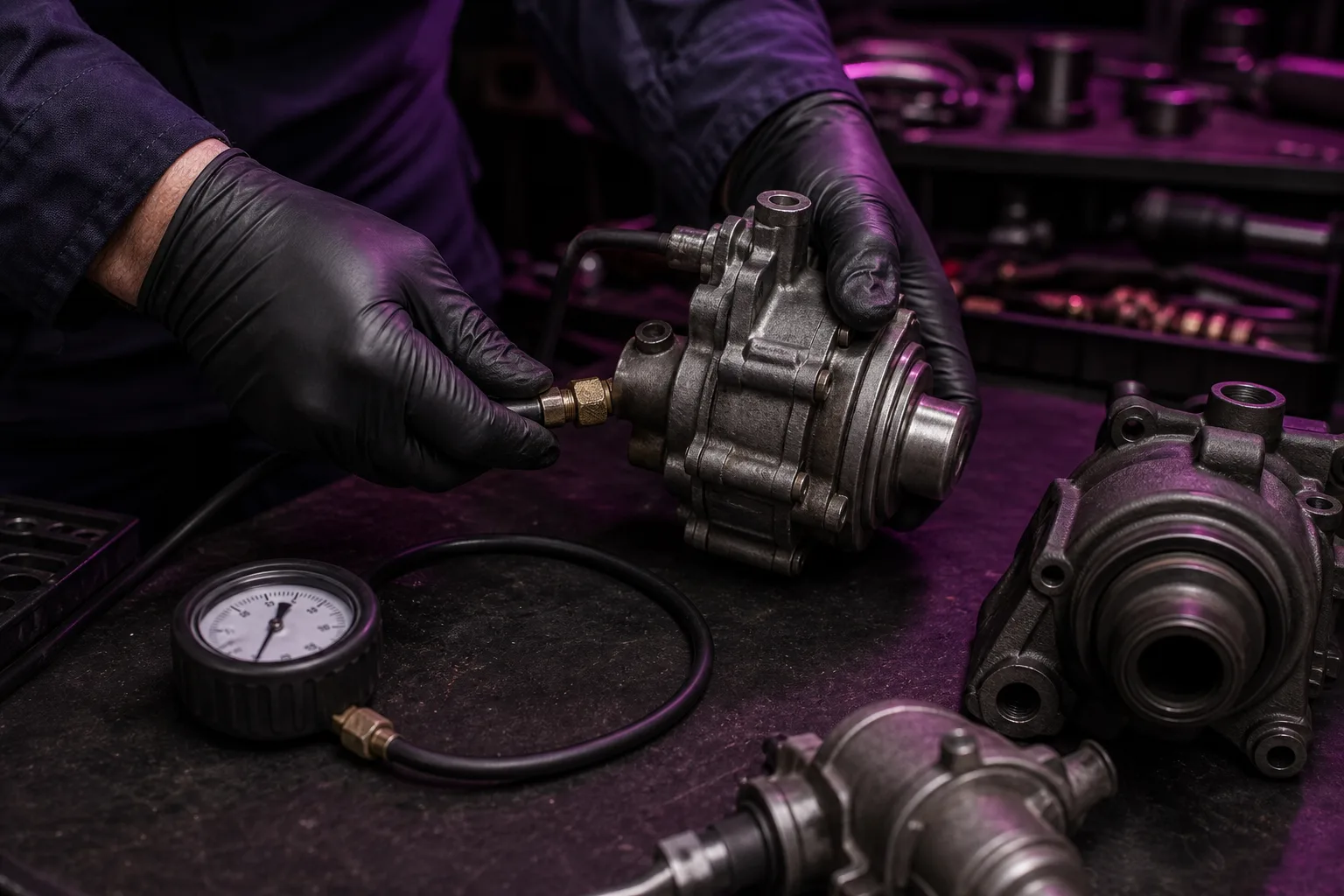
At paleontolog, we measure vacuum assist pressure during a controlled pedal application sequence. Readings below manufacturer specifications — typically below 18 inches of mercury on many diesel platforms — indicate the pump is not maintaining adequate vacuum for the booster.
2. Hissing or Whining From the Engine Bay
A faint hissing sound near the vacuum pump often points to internal seal leakage or a cracked vacuum line. A rhythmic whine that increases with engine speed may indicate bearing wear inside the pump assembly itself.
These sounds are easy to dismiss as general engine noise, especially in noisy diesel environments. Isolating the source with a stethoscope or vacuum leak detector during idle and moderate RPM helps confirm whether the pump is the origin.
3. Extended Stopping Distances
Drivers who know their vehicle well often report that stopping distances feel longer even though brake pads appear to have material remaining. Vacuum assist failure reduces the mechanical advantage of the booster, meaning the hydraulic system must do more work with less assistance.
We compare current stopping performance against baseline data when available. Even a moderate increase in stopping distance on a loaded diesel platform represents a significant safety concern that warrants immediate inspection.
4. Intermittent Brake Warning Indicators
Some vehicles trigger brake or stability system warnings when vacuum levels drop below threshold intermittently. The warning may clear after restart, leading owners to assume a sensor glitch. In many cases, the sensor is accurately reporting unstable vacuum supply from a degrading pump.
5. Vacuum Reserve Depletion Under Load
Healthy systems maintain vacuum reserve for several assisted brake applications even with the engine off. A failing pump often cannot rebuild vacuum quickly enough during heavy traffic or downhill driving where repeated braking is required.
We test reserve capacity by applying the brake pedal several times with the engine running, then repeating with the engine off. Rapid pedal hardening indicates the pump or check valve is not maintaining the vacuum reservoir effectively.
Our Diagnostic Approach
Before recommending pump replacement, we verify that vacuum lines, the booster diaphragm, and check valves are not contributing to the symptoms. Replacement is recommended only when the pump itself fails efficiency testing under load.
- Visual inspection of vacuum lines and connector integrity
- Static and dynamic vacuum pressure measurement
- Booster function test isolated from pump output
- Post-repair verification with documented clearance readings
When to Schedule an Inspection
If you notice any combination of the signs above — particularly hard pedal feel paired with extended stopping distances — schedule a professional inspection before the pump fails completely. Early intervention typically costs less than emergency towing and reduces risk to drivers and cargo.