Lane departure warning and lane keeping assist systems depend on a forward-facing camera mounted behind the windshield or in the grille area. That camera must know exactly where the vehicle sits relative to lane markings. When front-end geometry changes — even by fractions of a degree — the system may misread lane position, trigger false alerts, or fail to warn when drift actually occurs.
When Recalibration Is Mandatory
Manufacturer service information typically requires ADAS calibration after specific procedures. At minimum, recalibration should follow:
- Windshield replacement where the camera mounts to the glass
- Front suspension or steering component replacement affecting ride height or toe
- Bumper removal or structural repair that shifts mounting points
- Camera module R&R or connector repair
- Wheel alignment beyond factory tolerance thresholds
Skipping calibration after these events does not always produce an immediate fault code. Many systems continue operating with degraded accuracy until environmental conditions expose the misalignment.
Symptoms of a Misaligned Camera
Drivers often report lane departure warnings on straight, well-marked highways — particularly when the vehicle is centered in the lane. Others notice that adaptive cruise following distance feels inconsistent, or that automatic emergency braking sensitivity changes without explanation.
These symptoms overlap with other ADAS faults, which is why we always verify camera aim before replacing hardware. A misaligned but functional sensor is far less expensive to correct than unnecessary module replacement.
Equipment and Procedure
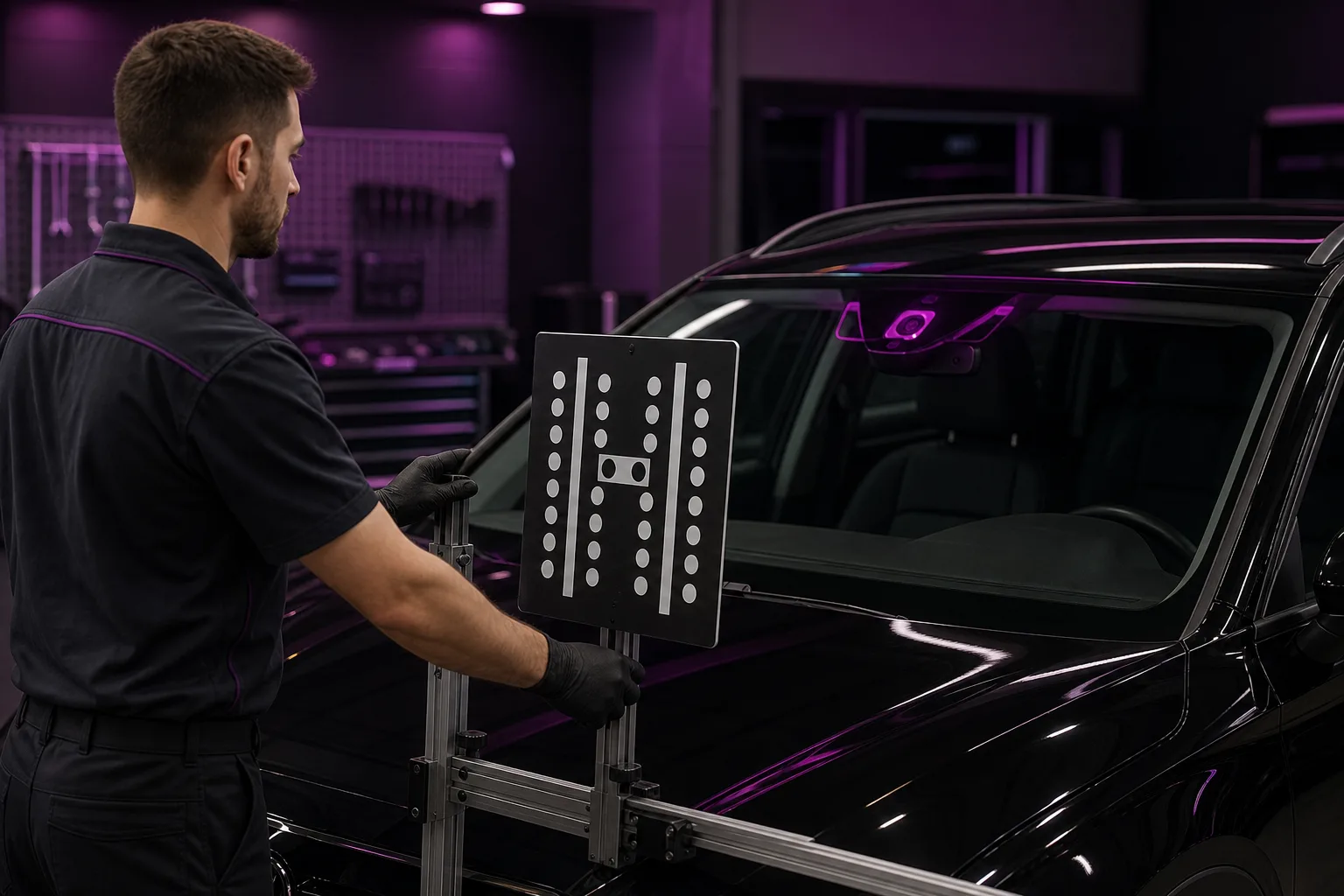
Static calibration uses manufacturer-specified targets positioned at precise distances and heights relative to the vehicle. Dynamic calibration requires driving on marked roads under defined conditions while the system learns reference points.
At paleontolog, we use OEM-compatible calibration fixtures matched to each platform. The process includes pre-scan diagnostics, physical target alignment, software-initiated calibration routines, and post-calibration verification drives where applicable.
Documentation from the calibration session — including before-and-after aim values — becomes part of the vehicle service record and supports any subsequent warranty or insurance inquiries.
Impact on Adaptive Cruise and Forward Assist
Many platforms share camera data across multiple ADAS functions. A lane camera aimed too far left may still track vehicles in adjacent lanes, causing unwanted speed adjustments. Forward collision warning thresholds can shift when the horizon reference point moves.
Treating ADAS as isolated systems rather than an integrated sensor network leads to incomplete repairs. Our protocol verifies all camera-dependent functions after calibration, not just lane departure status indicators.
Planning Repairs With ADAS in Mind
If your vehicle is scheduled for front-end work, ask whether ADAS calibration is included in the repair estimate. Shops without calibration capability may complete structural work correctly while leaving safety systems compromised. Scheduling calibration in the same service window prevents extended downtime and repeated shop visits.